Custom decks, composite decks, fences and repairs — designed and built to last. Serving Toronto, Mississauga, Vaughan, Richmond Hill, Markham and Brampton with licensed, fully insured craftsmanship.
Call or text us anytime — we typically reply within the hour.
📞 Call (437) 778-8098💬 Text UsComposite or wood, deck or fence — here's how the options compare, and what to expect from each.
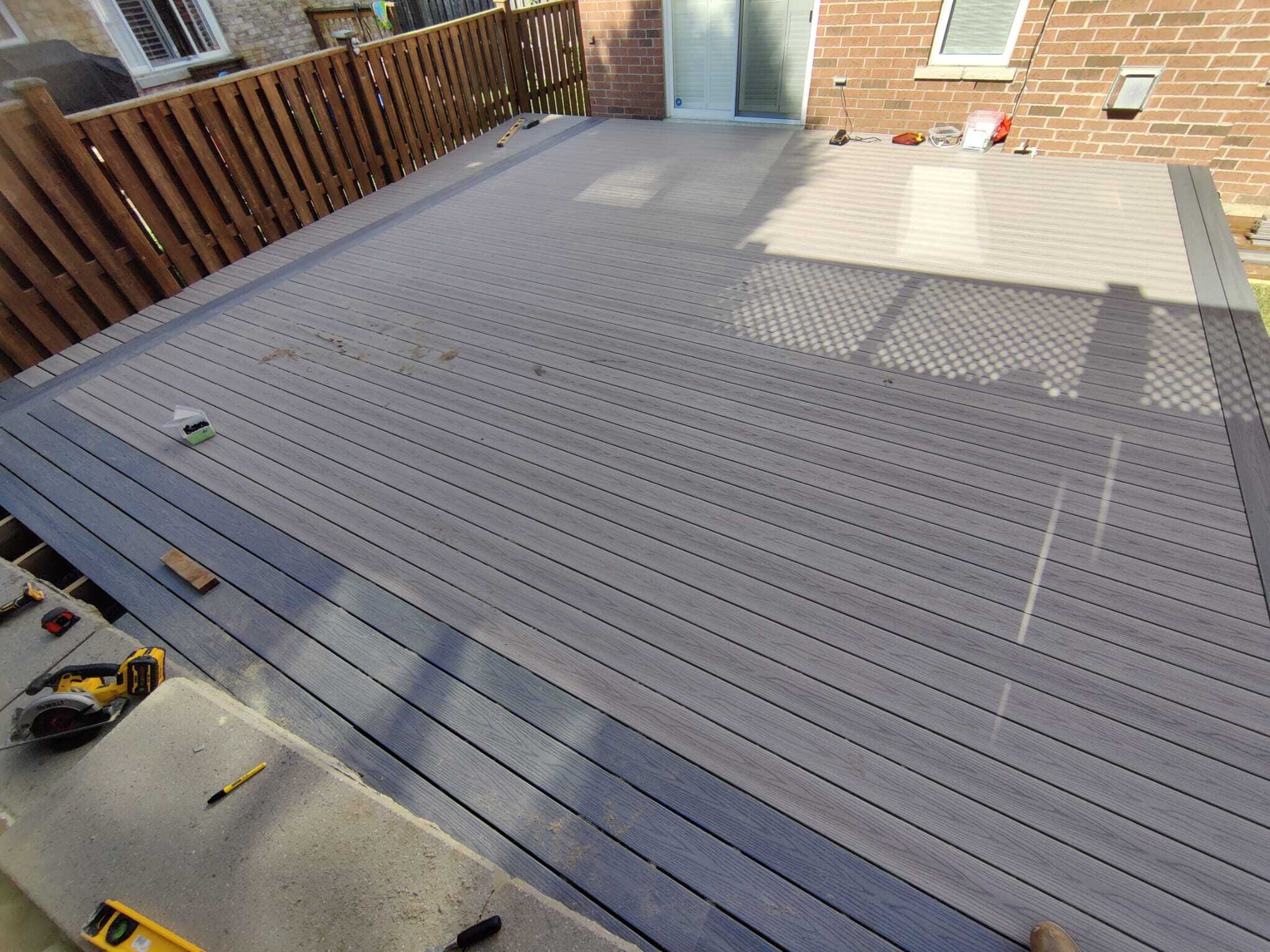
Built from engineered wood-fibre and recycled plastic boards, composite decking doesn’t need annual staining or sealing and resists fading, splintering and rot. It costs more upfront than wood, but most composite systems carry 25–30 year manufacturer warranties, so the higher price spreads out over a much longer, lower-maintenance life.

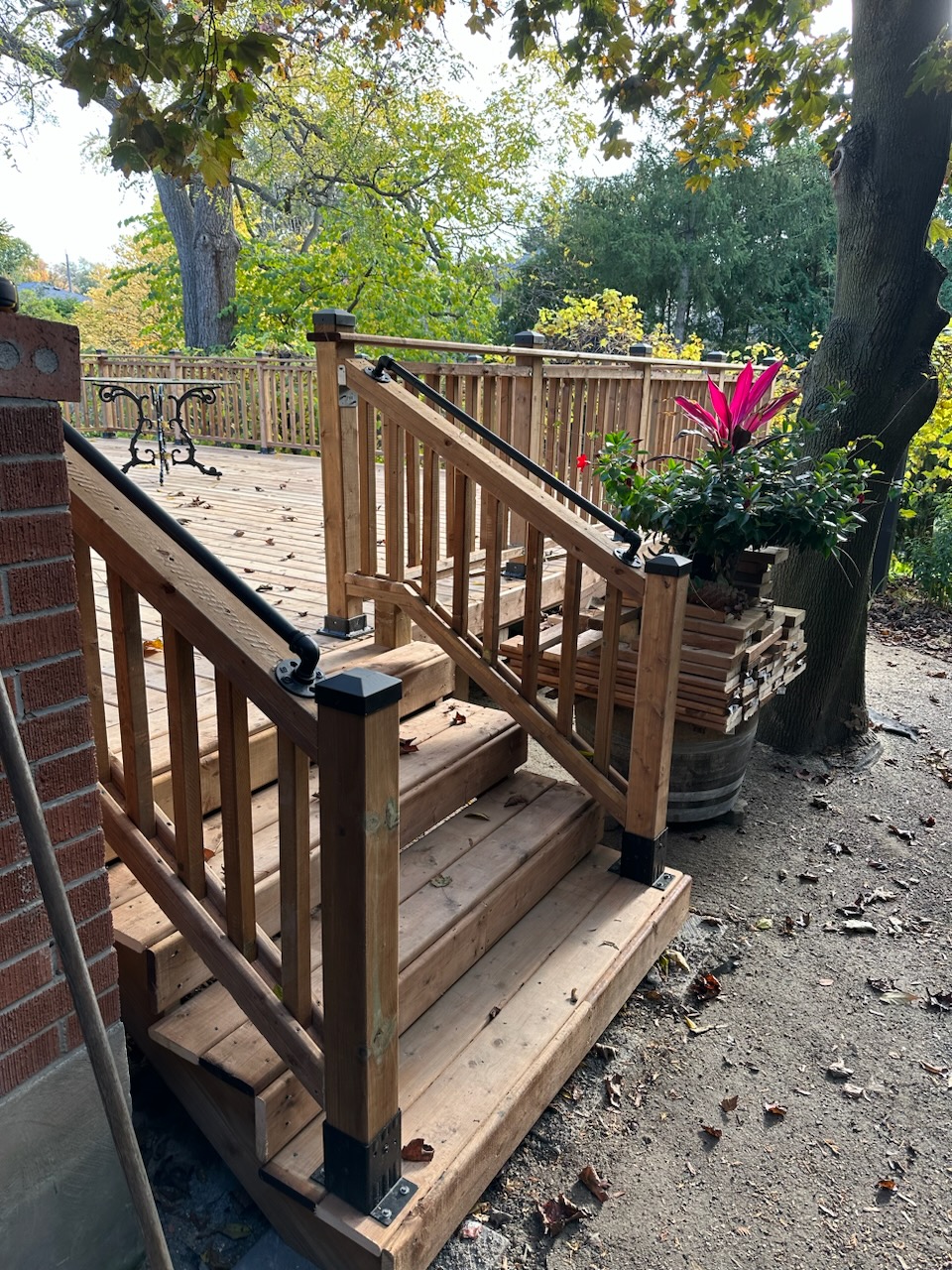
Pressure-treated and cedar decks are the most affordable way to get a solid, good-looking deck, with a warm natural finish composite can’t fully match. The trade-off is upkeep — expect to stain or seal every 2–3 years to keep it protected from Ontario’s freeze-thaw winters.

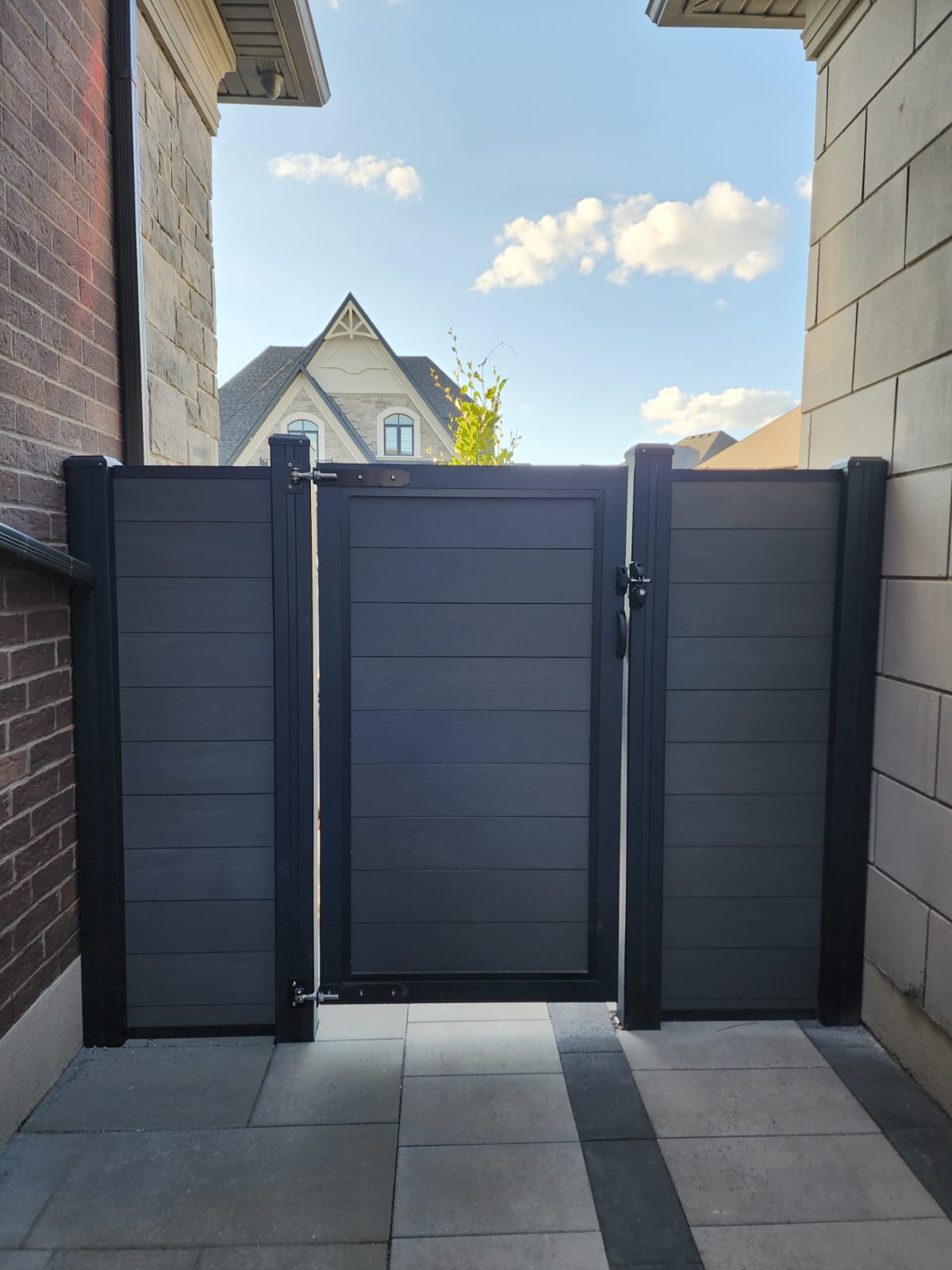
Composite fence panels hold their colour and shape through Ontario winters without warping, cupping or rotting the way wood eventually does. Aluminum posts keep the structure straight for years, making this the lowest-maintenance privacy fence option available.

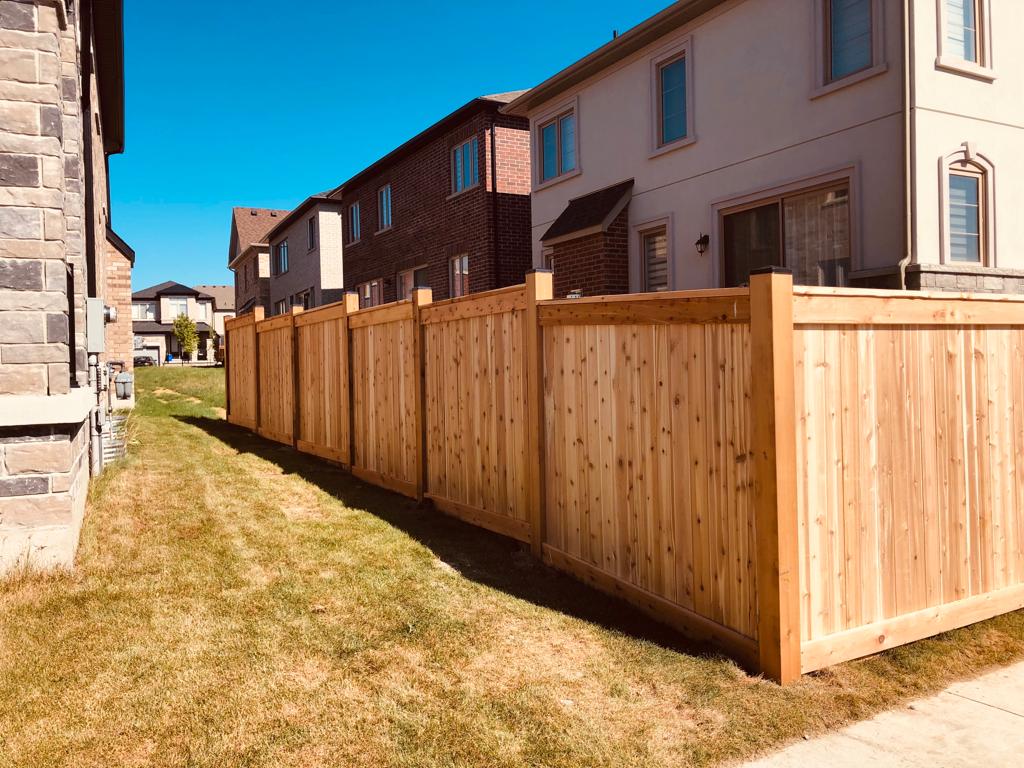
Wood privacy and board-on-board fencing remains the most common choice for GTA backyards — affordable, straightforward to repair in sections, and easy to match to an existing fence line. With periodic staining, a well-built wood fence holds up for many years.
37 completed composite decks, wood decks, composite fences and wood fences across the Greater Toronto Area.
Based in Richmond Hill — if your city isn't listed, call or text us and we'll let you know if we cover it.
Cost depends on size, height, material and site access. Pressure-treated wood is the most affordable starting point, cedar sits in the middle, and composite costs more upfront but needs far less maintenance over its life. We give free, itemised estimates after seeing the space — call or text us for a quote on your specific project.
Generally, decks more than 60 cm (24 in) above grade or attached to the house require a building permit, and most municipalities have height limits for fences — commonly around 2 m for rear yards and lower for front yards. Rules vary by city, so we confirm requirements with your municipality before we start and handle the permit process where needed.
Composite costs more upfront but does not need annual staining or sealing, resists rot and splintering, and holds its colour. Wood is cheaper initially and has a warmer natural look, but needs regular maintenance to stay in good shape. If you plan to stay in the home long term, composite usually works out better; if budget is the priority, pressure-treated wood is a solid choice.
Often, yes. Rotted boards, loose railings, sagging gates and shifted posts can usually be repaired for far less than a rebuild. We will assess the framing and footings first — if the underlying structure is sound, repair is the better value, and we will tell you straight if it is not.
Spring through fall is the main season, and it books up quickly. Late fall and winter builds are possible depending on ground conditions and frost depth, and booking in the off-season often means shorter wait times. If you are planning for spring, reaching out over the winter is the best way to secure a slot.
Yes. We are a licensed contractor, fully insured, and covered under WSIB. We are happy to provide proof of coverage before any work begins.
Most standard residential fences take one to three days. Decks typically run three days to two weeks depending on size, height, railing type and whether footings need to cure. We give you a realistic schedule with the estimate rather than an optimistic one.
Whether you're planning a multi-level composite deck or replacing an old fence — call or text for a free, no-pressure estimate anywhere in the GTA.
Follow Our Work